From Your Photoshoot to Your Walls: The Ultimate Guide to Choosing and Styling Photographic Art in Your Australian Home
Introduction: Turning Your Cherished Photos into Timeless Art
The experience of a professional photoshoot captures fleeting moments, transforming them into lasting memories. The laughter, the connections, the milestones, these are the stories that define a life. The final, and perhaps most rewarding, step in this journey is bringing these captured memories from a digital gallery into the tangible, everyday warmth of a home. This guide is designed to demystify that process, providing a clear, simple path to selecting and displaying photographic art in a way that feels both professionally designed and deeply personal.
Making the right choices can feel daunting. What finish best suits the photograph? How large should the artwork be to complement the space above the sofa? Is one grand statement piece better than a collection of smaller pieces? These are the questions that stand between a cherished photograph and its place on the wall. This report will navigate these decisions, offering expert principles and practical advice grounded in Australian interior design sensibilities. It will explore the key choices clients face: selecting the ideal type of artwork, determining the perfect scale for a specific space, and mastering the art of placement to create a home that is a true reflection of the people who live there.
The Australian home, with its emphasis on natural light, open-plan living, and a connection to the landscape, presents unique opportunities for displaying art. This guide considers these specific contexts, ensuring the final result is not just a beautiful display, but one that feels harmonious and perfectly suited to a relaxed, modern Australian lifestyle.
Chapter 1: The Great Debate: Canvas vs. Framed Artwork
The first major decision in transforming a photograph into a physical piece of art is choosing the medium. The two most popular choices, canvas prints and framed prints, offer distinctly different aesthetics and practical benefits. The ideal selection depends not only on the style of the photograph but also on the decor of the room, the intended location, and the desired longevity of the piece.
1.1 The Modern, Immersive Appeal of Canvas Prints
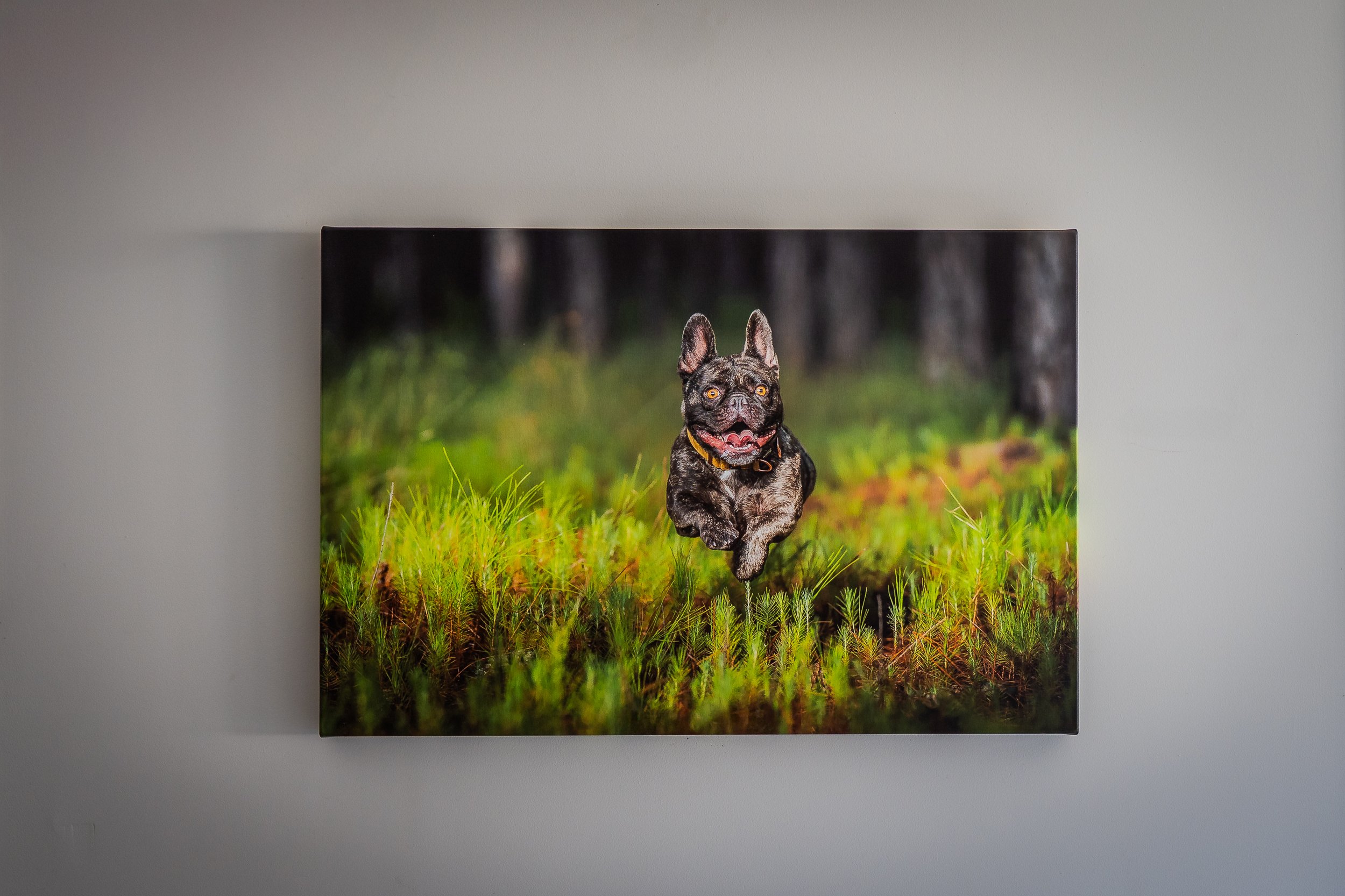
Canvas prints have surged in popularity, offering a contemporary and sophisticated way to display photographic art. Their defining characteristic is a frameless or "gallery wrap" presentation, where the image extends around the sides of a hidden wooden stretcher frame. This technique creates a seamless, modern appearance that gives the artwork a sense of depth and dimension, making it feel as though it is floating on the wall.
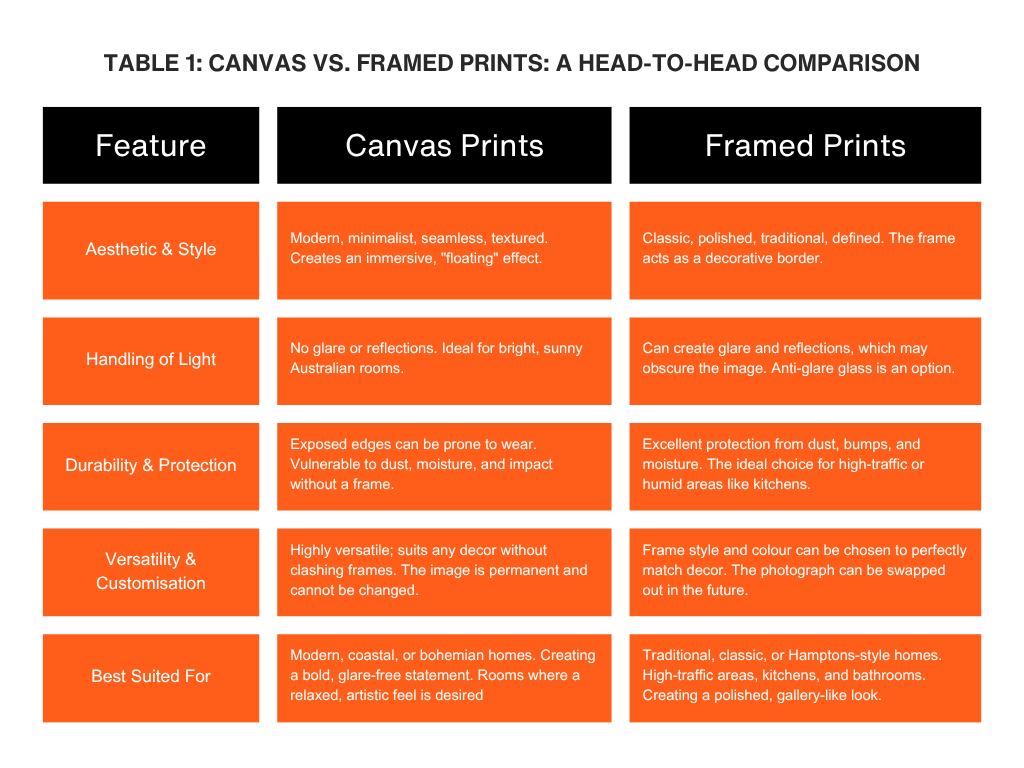
Aesthetic and Feel The texture of the canvas itself is a key part of its appeal. When a photograph is printed on canvas, it takes on a subtle, painterly quality that adds intrigue and an artistic feel, almost like a traditional painting. This tactile quality can be particularly effective for enhancing nature-based photography, landscapes, or more abstract images, adding a layer of warmth and sophistication. The lack of a border or frame means the image is the sole focus, creating an immersive experience for the viewer and making the artwork appear larger than its dimensions might suggest.
Practicality and Advantages One of the most significant practical advantages of canvas prints, especially in the bright, light-filled homes common in Australia, is the absence of glass. This means there is no glare or distracting reflections, allowing the image to be viewed clearly from any angle and at any time of day. Canvas prints are also remarkably lightweight compared to their framed counterparts, which makes them easier to handle, transport, and hang, often requiring less substantial hardware. For those considering a large-scale statement piece, canvas is often a more budget-friendly option upfront. Their inherent versatility means they can integrate into almost any decor style without the risk of a frame clashing with other design elements in the room.
Considerations and Drawbacks Despite their many benefits, there are considerations to keep in mind. Because the canvas is exposed, the edges and corners can be more prone to wear, tear, or damage from accidental bumps, particularly in high-traffic areas. The textured surface can also accumulate dust over time and requires gentle cleaning with a soft, dry cloth or brush. Without the protection of a frame and glass, a canvas print is more vulnerable to environmental factors like moisture and humidity, making it a less ideal choice for bathrooms or kitchens. Finally, the image on a canvas print is permanent; unlike a framed print, the photograph cannot be swapped out later.
1.2 The Classic, Polished Look of Framed Prints
Framed prints represent the timeless, traditional method of displaying art, offering a sense of structure and elegance that is often associated with galleries and formal exhibitions. A framed print typically consists of a photograph printed on high-quality paper, which is then matted and mounted within a frame under a protective layer of glass or acrylic.
Aesthetic and Customisation The primary aesthetic function of a frame is to provide a distinct boundary between the artwork and the wall, creating a clear focal point and giving the piece a polished, finished appearance. This structured look can enhance the detail and intricacy of a photograph, particularly portraits or images with fine details. The frame itself is a powerful design element. With a vast array of materials (like wood or metal), colours, and styles available, a frame can be selected to perfectly complement or contrast with a room's existing decor. A well-chosen frame can act as a bridge, helping an artwork blend seamlessly with its surroundings, for instance, by matching an oak frame to an oak coffee table.
Protection and Durability The most significant practical advantage of framed prints is protection. The frame and its acrylic or glass covering shield the photograph from dust, accidental bumps, fingerprints, and, crucially, moisture. This makes framed prints the superior choice for high-traffic areas like hallways, busy family rooms, or children's bedrooms. Their resistance to humidity also makes them the only suitable option for placement in kitchens or bathrooms, where steam and moisture could otherwise damage a print. High-quality framed prints often use acrylic, which is lighter and more shatter-resistant than traditional glass, adding to their durability.
Considerations and Drawbacks The protective glass or acrylic can be a double-edged sword, as it is prone to creating glare and reflections, which can obscure the view of the photograph in brightly lit rooms. While specialized non-reflective art glass is available to mitigate this, it can add to the cost. Framed prints are significantly heavier and can be more difficult to hang securely. They also tend to have a higher upfront cost due to the materials and craftsmanship of the frame itself. Another consideration is stylistic longevity; while a frame might match current decor perfectly, it could feel dated or clash if the room is redecorated in the future. Finally, the mat and frame take up space, meaning the printed image itself is smaller relative to the total wall space occupied.

1.3 Expert Recommendation: Matching Your Art to Your Aussie Home Style
The choice between canvas and framed prints often comes down to a balance between the desired aesthetic and the practical demands of the space. A helpful approach is to consider not just the look, but also the function of the room where the art will live. For example, a client might love the modern, clean look of a canvas print, but if the intended location is a busy hallway where children often run past, the superior durability of a framed print makes it the more practical choice. Asking questions like, "Does this piece need to be easy to wipe down?" or "Is this room prone to moisture?" can guide the decision towards the most suitable option.
Another way to frame the decision is to consider one's personal decorating philosophy. Some view a piece of photographic art as a "forever piece"—a permanent centrepiece intended to be cherished in its current form for many years. For these individuals, the commitment of a canvas print, where the image is permanently bonded to the medium, is a perfect fit. Others enjoy refreshing their decor more frequently, imagining a time when they might want to swap out the current photograph for a new one while retaining the beautiful frame. For this "change-it-up" decorator, a high-quality frame is a long-term investment that offers the flexibility to evolve with their home and family.
Ultimately, the artwork should feel at home in its environment.
For Coastal, Boho, or Modern Minimalist Homes: Frameless canvas prints are often the ideal choice. Their relaxed, seamless look complements the natural textures, open-plan living, and connection to the outdoors that define these popular Australian styles.
For Traditional, Hamptons, or Classic Homes: Framed prints tend to be more suitable. Their structured elegance, defined borders, and polished finish add a layer of sophistication that elevates these interior styles.
Stay tuned for part 2…